Training a Steadfast Recall

Melissa Alexander's picture
Excerpted from Click for Joy: Questions and Answers from Clicker Trainers and their Dogs by Melissa Alexander, an unparalleled guide to the concepts of clicker training. Melissa is also the moderator of ClickerSolutions, an online discussion forum.


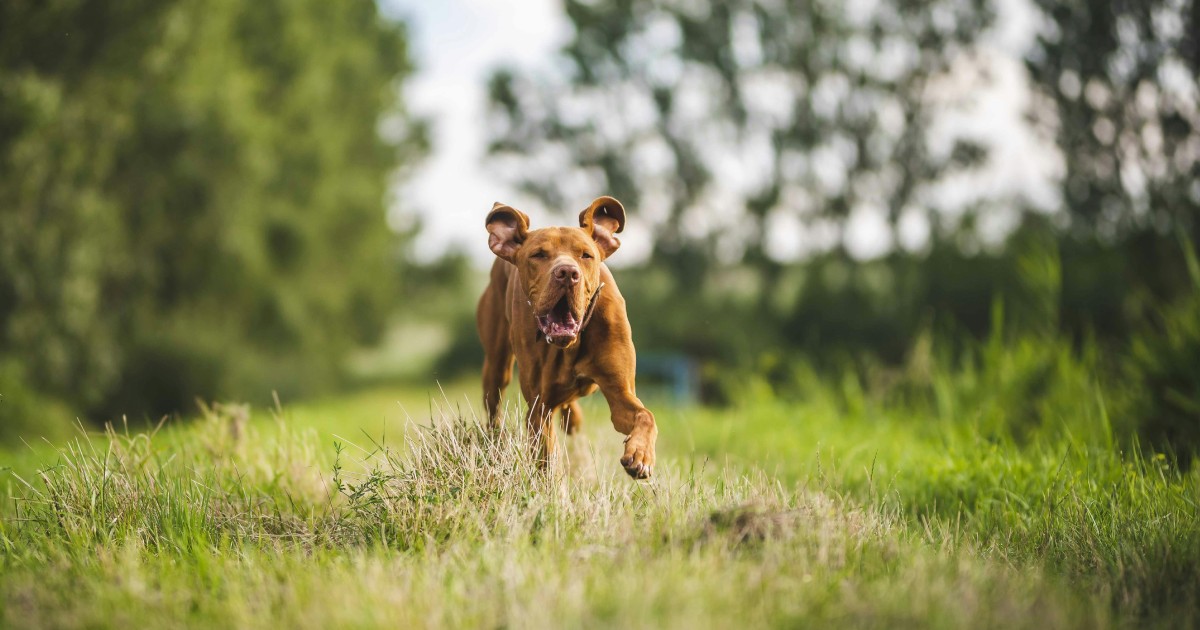
happy dog running

A recall can save your dog's life. It can stop her from running in front of a car, or from chasing an animal into the woods. It can call your dog away from a tempting but dangerous delicacy she has just discovered.

Getting the behavior

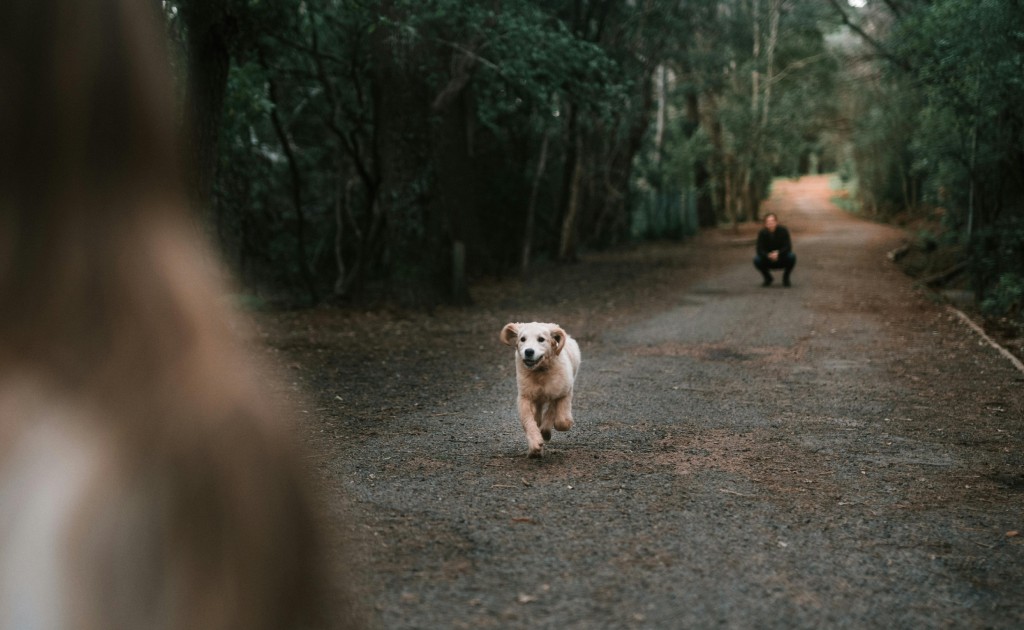
Teaching a recall is easy—just reinforce your dog for coming to you! Start by kneeling a few feet away and making happy noises. Click when the pup takes her first step toward you and give her a yummy treat when she gets to you. Run a few feet away and repeat the process. Make it a fun game! When she's reliably coming to you, start using your cue. Add distance and distractions to the recall just as you would for a sit or other behavior. Calling a young puppy from across the yard when she is exploring a new, interesting scent is setting yourself and your pup up to fail. Walk to within a few feet, kneel down, and call her from there—and make sure to reinforce her for abandoning the distraction with something even better.

Success comes from repetition. Don't increase your distance or distractions until your dog responds immediately and enthusiastically to the recall cue. While you're training, remember to give a super-good reinforcement every time you call your dog.

The collar grab

Click here for video
Click here for video on
teaching "come"

When you call your dog, take hold of her collar before you deliver the reinforcer—and do that every single time. It does you no good to have a recall if you can't then catch your dog, and dogs have been killed because they avoided their owners' hands and at the last moment bolted into the street. Having someone reach out to grab and restrain you is startling at best. Associate reaching and grabbing with good things by feeding a yummy treat once you have a hand on your pet's collar.

Exercises for excellence

Try these recall games to help teach your pet recalls are fun and rewarding:

  • When your dog is several feet away, say her name and give your recall cue. Then begin running backwards away from the dog. Click when she starts toward you and reward her when she catches up. This exercise engages the dog's natural desire to chase.
  • While you're training, remember to give a super-good reinforcement every time you call your dog.
  • Ask one or more friends or family members to help. Stand eight or ten feet apart, facing each other (or make a circle, if you have more than two people). Have one person call the dog. Click as soon as she starts toward the person, and have the person give a treat. Then have the next person call her. Repeat, gradually increasing the distance between people.
  • Practice recalls in your house. Call your dog from across the room, from another room, from upstairs, from downstairs. Have a friend hold your dog (or ask your dog to stay) for a moment, then play hide and seek.

Tips for success

Keep the following tips in mind as you train your recall and incorporate the recall into everyday life:

  • Always make recalls rewarding.
  • Use the highest value rewards you have.
  • If you don't have a reward handy, make a big production of taking your dog to get one. She earned it, and the whole party is a jackpot.
  • Practice calling your dog away from something she wants, give her a high-value reward, and then let her go back to what she was doing. Practice that a lot.
  • Do lots and lots of short-distance recalls. You'll get more reps and build a habit faster. Grab your dog's collar before you give the reward every time. Again, a recall is no good if you can't catch your dog.
  • Why is cueing slightly different when training "come"? Read a Q&A on structuring the cue.

  • Call your dog one time. If she doesn't respond, go and get her (except during training, when a non-response is considered an error and dealt with through extinction).
  • Don't call your dog when she isn't going to respond. Yelling "Missy, come!" over and over as she runs around ignoring you only weakens your cue.
  • Practice your recall in distracting situations, increasing the level of distractions gradually.

Finally, don't take recalls for granted. Remember, your dog's life could depend on the reliability of her response. This means never, ever punish a recall:

  • Don't call your dog and then do something she doesn't like, such as crating or confining her and then leaving her alone.
  • If your dog is doing something you don't want her to do, don't call her and scold her—or even call her and ignore her. If you call her, reinforce her for coming.
  • If your dog is doing something she enjoys, don't call her away without rewarding her. Balance the times when fun ends with several "practice" recalls after which she is allowed to go back to what she was doing.
About the author Melissa Alexander is a writer and clicker trainer in Seattle, WA. She owns the highly popular ClickerSolutions mailing list and is the author of Click for Joy, the award-winning, essential guide to clicker training.

Husky breed and the steadfast recall

Yes, I need to reconsider high value treats. Maybe I have gotten lazy and fallen into old patterns.

While on the subject of steadfast recalls, any thoughts on the runaway tendency of the husky and other breeds like it such as the Klee Kai? The breeders tell me that no matter how many dogs you have trained that these breeds can never be off leash. Is that true in your opinion? Or once again, the value of the reward?

Diane

Hi there the recall is

Hi there the recall is really important given the working cocker s need to hunt. My little cockers prey drive is high what do you guys think I should to try and stop it or at least help her to focus on the pack drive?/

recall

Hi there, I have an English working cocker spaniel, she is just two, and I have done lots of training, kennel club good citizen guide and going out with individual trainers about her recall. She was great until she hit about a year old and then she got the smell of something and she would go and hunt. I'd use the recall whistle but alas she just ignored me until she had finished her hunt. I have just got clicker gun dog - Helen Philips, and I am trying to reinforce with the clicker but would welcome any input form you guys. I really enjoy walking may be four five miles an wanted the dog to be my companion but I am now afraid she will not stop and then return to me can you help
Thanks

Hi vaue treat

Jenny Ruth you are correct, if you want to capture the behavior start with High Value Treats (meat), then work down to lower value treats (dog food works). Once the behavior is captured, you can wean off the treats all together and replace it with tons of praise. I trained Libby to shake in 30 minutes and by later that night I had replaced pepperoni with praise. Every dog learns differently so be patient and consistent. That is the key!

Jenny Ruth Yasi's picture

Well

Well, "shake" is a very different behavior than an offleash "recall" with distractions, and you're thinking about something entirely different than what was being discussed in this thread.

This makes a great experiment for you though, because the shake behavior is so easy to train, and it's not (hopefully) of life or death importance. So, now you're asking your dog to "shake" and using ONLY praise to reinforce. Try asking for "shake" five or six times every day for a week, using only praise to reinforce. Write down the results of each attempt (each time you say "shake" that counts as one attempt). Most dogs will rapidly start to ignore the cue because praise has such low value as reinforcement.

So change your tactic. You might have to go back to start and recapture the behavior and show the dog that yes, you are willing to pay in pepperoni again. But then show her that you'll also pay her for a "shake" by letting her out of the bathtub. Or surprise her by throwing her a ball after she shakes. Or give her a cookie. Or give her praise. Mix it up, so she never knows exactly what kind of a prize she might win. Ask for the behavior several times a day for a week, using a different sort of reinforcement every time. Write down the results of each attempt. Maybe ask for a shake, and when she does, click and run grab her leash to go for a walk! You'll see for yourself that when we continue to "pay" our dogs with a nice variety of (desired)reinforcements, the behavior grows stronger.

www.wholedogcamp.com
www.jennyruthyasi.blogspot.com

Jenny Ruth Yasi's picture

reliable recalls

While my young fit dog comes like a shot in many environments (and I don't even need more than a petting reinforcement), if she's tired and we're out at the beach and she's off leash and some kind of a big-ass distraction comes along, I'd better be standing no more than ten feet away when I say "come." And I'd best have some kind of powerful reinforcement handy, and she'd best be in the mood for whatever reinforcement I have. Dogs reliable in one situation, might not be reliable in another.

So part of getting that "reliable recall" really involves knowing (and accepting) your particular dog, managing your dog, anticipating the things that might distract her, and simply not giving her more off-leash privileges than she can handle.

My dog is getting much better about recalling from big distractions (like running squirrels) but took lots of training time, practice with the help of a longline, patience. I still need to practice around squirrels about 1/2 hour, 2-4 times a week to keep and develop her longline recall around nearby running squirrels. If we don't practice around that particular distraction, she reverts back to previous behaviors.

People who train using electric collars report exactly the same sort of imperfect and frustrating results (and they wind up with the negative side effects of applied punishment to boot)! No method can honestly promise 100% reliable instant recall for "any" dog in "any" situation. There is simply no such thing. Animals learn to recall in increments, just like they learn anything else.

As we practice and IMPROVE our dog's ability to recall from various distractions in various situations, there is also latency to contend with, IE how FAST will the dog recall away from that strong distraction-at-a-distance? Reducing that latency is part of the recall training challenge, and so we begin with teaching fast recalls from a short distance, then start adding distractions, beginning with easy ones. Incrementally increase the distraction challenge. With strong distractions (squirrel, deer) it's safer to begin practice on a longline, with the strong distraction way off in the distance. Once you get the dog so she can *instantly* recall from a strong distraction (scent?) with the handler standing just ten feet away, we can start building distance on that.

www.wholedogcamp.com

This concept seems so

This concept seems so simple but i still struggle with the steadfast recall. When she doesn't come I usually end up by going to get her. That is where my training breaks down. This is the first dog that I have had that resists the recall. I have to admit that I get very discouraged. My husband says that I spoil her by giving her treats when she comes and that she will only come when I have a super valuable goodie. What if I call her sometime and I don't happen to have a high value treat? Thanks in advance.

Diane

Jenny Ruth Yasi's picture

Hi value treat

But we ALWAYS have a high value treat with us, we just have to figure out what it is! It might be, RUN with dog to someplace dog wants to be. It might be, pull a piece of rabbit fur out of pocket and wiggle it while running in a different direction. It might be, allow dog to jump up on you, or show dog a live grasshopper, or who knows? tickle and play tug!...food isn't always the highest value reinforcer...

www.wholedogcamp.com